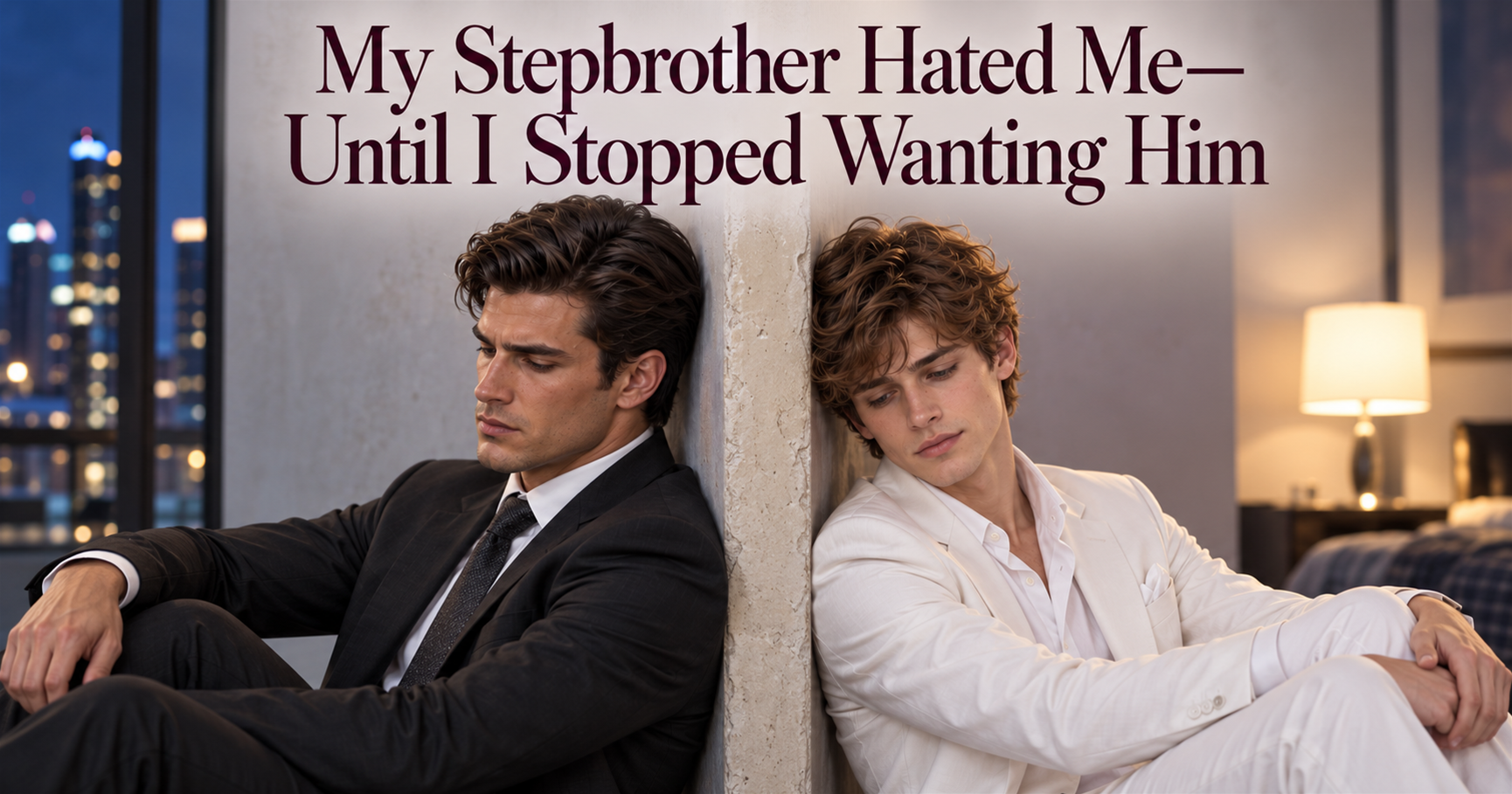
"My Stepbrother Hated Me—Until I Stopped Wanting Him" Chapter 4
What He Wouldn't Deny
"Because I don't feel about you the way I should."
Nate said it quietly. I heard every word.
I stopped wiping my face.
He looked at the space between us, then back at me.
"I saw you with that man at the bar, and I wanted him to leave. When you leave a room, I notice how long it takes you to come back. I know how that sounds."
My breath caught.
"Then don't tell me I'm imagining it."
"You're not."
For three weeks, I'd built explanations that made his behavior hurt less. Guilt. Family duty. A temporary interest in becoming a better person.
Now he'd taken all of them away.
"How long?" I asked.
"I don't know when it started. I know I shouldn't have let you keep wondering."
I looked past him at the closed door.
Downstairs, Claire was wearing a ring.
"What are you going to do?"
He moved one step closer, then stopped himself.
"I need to think."
I almost laughed.
"You've had a party about it."
He flinched.
I hadn't meant to be cruel. For once, I didn't hurry to fix the effect of my words.
"I didn't understand what I was agreeing to," he said.
"Claire probably does."
His face changed then. Not anger. Recognition, ugly and overdue.
"You're right."
"I'm not asking you to leave her for me tonight. I'm asking you to stop making me feel like there's something here when you won't do anything about it."
"There is something here."
The certainty in his voice hurt worse than a rejection.
"Then take care of it," I said. "Don't keep handing it to me and acting surprised when I can't put it down."
For a long moment, neither of us spoke.
He lifted his hand, slowly enough that I could have stepped toward it.
I didn't.
He let it fall.
"All right," he said.
He looked as though he wanted to say more. Instead, he went downstairs.
I sat on the bed until the music ended.
At midnight, Ben answered on the first ring.
"Tell me where you are."
"My room."
"Do you need me?"
I stared at the door Nate had finally closed without my wishing he would stay.
"Can you just talk?"
So he talked about the guy who had spent twenty minutes explaining cryptocurrency to him beside the buffet. He complained about the tiny plates. He described the cab driver's spectacular hatred of cyclists.
Eventually, I laughed.
Then I cried hard enough that he stopped making jokes and stayed on the phone while I did it.
The next morning, I came downstairs early.
The house looked embarrassed. Half-empty glasses stood on windowsills. Flowers leaned in buckets beside the kitchen. Someone had abandoned a single expensive shoe beneath the piano.
I made toast.
Nate came in as I was putting the jam away.
"You don't have to leave because I'm here," he said.
ADVERTISEMENT
"I'm leaving because I have a seminar."
"On Saturday?"
"Research workshop."
He knew. I'd told him four days earlier. It seemed to occur to him a second after I answered.
"Right."
I picked up my bag.
"Will you be back for dinner?"
"I haven't decided."
He stood beside the coffee machine with his hands empty.
"Could we talk later?"
"Have you thought?"
His eyes held mine.
"Not enough."
"Then not yet."
I left before my courage noticed what I'd done.
On the bus, I kept expecting relief. Instead I felt sick and proud and lonely in alternating bursts.
At the workshop, a graduate student named Tessa asked whether I could help prepare materials for a summer project. Normally, I would have asked which evenings it involved before saying yes.
This time, I said I'd check my class schedule.
My own schedule.
It felt like learning to write with the other hand.
Nate sent a message at noon.
Have you eaten?
I stared at it for a while.
Then I wrote, Yes. Thank you.
No joke. No question that would keep the conversation alive.
He didn't reply.
That evening, I ate with Ben in his apartment above a bakery. The windows rattled when the buses passed. One kitchen drawer required encouragement and a knife to open.
"Very glamorous," I said.
"You can visit a rich person if you need better drawer access."
He handed me a plate of pasta.
I told him what I'd said to Nate.
Ben didn't ask for every word. He listened, then pointed his fork at me.
"If you need somewhere to stay, the sofa turns into a bed. Allegedly. I've never trusted it enough to try."
"Thank you."
"You'd have to tolerate my personality."
"I'm already doing that for free."
He smiled. It made the room feel less small.
I went home at ten.
Nate was in the living room, a book open on his lap.
He wasn't reading it.
"Good evening," I said.
"Good evening."
I made it to the stairs before he spoke again.
"Did you have a good day?"
I looked back. Under the lamp, he seemed almost absurdly handsome, which felt like an unnecessary complication.
"Some of it."
He nodded once.
"I'm glad."
He didn't ask where I'd been.
I went upstairs and shut my door.
For the next four days, we practiced politeness.
I stopped asking whether he wanted coffee. I stopped staying downstairs after my work was finished. If Mom asked me to take something to his room, I said I was busy, and sometimes I actually was.
On Tuesday, Martha put his mug beside mine by habit.
I moved it to the other end of the counter.
Nate saw.
He said nothing. That was becoming more difficult to bear than his sharpness.
On Wednesday night, I found the blue blanket outside my door, folded, with a note on top.
Martha says the laundry service can fix the shedding. I asked them to try.
I sat on the floor and read it twice.
Then I put the blanket on my bed and left the note in the drawer.
The next morning, I thanked him.
His face softened so suddenly that I almost reached for the rest of the conversation.
Instead, I picked up my bag.
"Elliot," he said.
I stopped.
"I miss talking to you."
I believed him.
That was what made the answer hard.
"I miss it too."
He waited.
"But I can't be the place you come to feel better about a decision you won't make."
For once, I let him be the person left standing in the hall.