"The Key He Was Given: Two Missing Girls and the Evidence He Couldn’t Erase" Chapter 7: The Place He Pointed To
Chapter 7: The Place He Pointed To
The marker in the dirt was not dramatic. It was a small piece of orange plastic set beside a patch of weeds.
But when the forensic technician knelt there and stopped digging, Detective Reyes knew the recovery had begun.
She crossed the perimeter and spoke to the team in a voice too low for Penny and Warren to hear. Then she returned to the car. Her face did not change, which was how Warren understood before she said a word.
"We have found Laura," Reyes said.
Penny made no sound at first. She pressed Laura’s photograph to her coat and looked through the windshield toward the people moving carefully around the flagged ground.
"Is she alone?" she asked.
Reyes answered with the same restraint she had carried through every visit. "We are securing the site. I will tell you what we can confirm."
Warren got out of the car because sitting beside his mother had become impossible. The highway noise came in waves beyond the trees. A truck passed. Somewhere, a radio clicked. Nothing about the place paused for the fact that Laura had been missing beneath it.
He wanted to walk to the recovery team. He wanted to demand that someone let him see her. Instead, he stood beside the car until Reyes returned and told him that he could not go beyond the tape.
"Not because she is evidence," Reyes said, anticipating the anger in his face. "Because she is Laura, and we have to protect the truth of what happened to her."
The recovery took the rest of the day. Soil was lifted in layers. Each item was photographed before it moved. A medical examiner’s investigator documented what the ground could still say. Hadden remained in the transport vehicle, his attorney beside him, while the location he had supplied became part of the formal record.
Penny asked to leave only after sunset. Warren drove her home without turning on the radio. At the house, she placed Laura’s photograph on the kitchen counter, then took it back upstairs.
"I don’t know where she belongs now," Penny said.
Warren sat at the table. "With us. She belongs with us."
The next morning, the news trucks were at the end of the street. Warren saw them through the blinds and refused every request for a statement. Detectives had not released details, but the town had already understood the shape of the story.
Laura had not left. Laura had not started over. Laura had been taken from the house where she was supposed to be safe.
The charges against Hadden were filed after prosecutors reviewed the recovery, the entry evidence, the pillowcase print, the van records, the storage unit, and the laboratory reports. None of the individual pieces carried the entire case. Together, they made a route from Penny’s spare key to the wooded ground beside the interstate.
ADVERTISEMENT
Hadden eventually entered a guilty plea. In court, the prosecutor described the case without turning it into a spectacle: unauthorized access to the house, an attack inside Laura’s bedroom, the effort to remove and conceal her, and actions meant to make the timeline uncertain.
The details were painful enough without decoration.
When the judge asked whether the plea was voluntary, Hadden answered quietly. His words did not offer the family a reason. They offered only an admission of responsibility.
Penny sat in the second row with Warren beside her. She held a folded sheet of paper containing the remarks she had written for Laura, though she could not yet read them aloud. When the hearing ended, she did not look toward Hadden.
"I came because Laura should not be alone in this room," she told Reyes afterward.
Warren did not feel relief exactly. There was relief in no longer searching every parked car, in no longer wondering whether a phone call might bring Laura home. But it lived beside something heavier. The court had given the facts a legal shape. It had not returned the sister who left notes in book margins or the daughter who forgot to buy stamps.
At the burial, Penny chose music Laura had loved and asked friends to speak about ordinary things. One remembered Laura arriving early to help set tables. Another described the way she corrected people gently when they mispronounced a name. Warren talked about Wednesday dinners and how Laura never let anyone leave hungry.
No one used the service to describe Hadden.
That was Penny’s decision. She had spent too many months watching her daughter’s life become an investigation. The service would be about the person Laura had been before the house, the woods, and the headlines tried to replace her.
Years passed. The evidence boxes were stored, court files closed, and the house was eventually sold. Penny kept the photograph from the highway recovery day in a drawer she rarely opened. Warren learned how to live around the missing space in family conversations.
They also learned how to correct the stories other people told. A magazine writer once asked Penny whether she had forgiven herself for giving Hadden a key. Penny ended the interview before it began.
"That question makes my daughter’s death about my mistake," she said. "It was about his crime."
Warren was proud of her for saying it, though he understood how much it cost. In the first months after Laura was found, Penny had apologized to almost everyone: to Warren, to detectives, to Laura’s friends, even to strangers who stopped her after church. Each apology had been an attempt to find a lever in the past, something she could pull to make the door stay closed.
There was no lever. There was only the record they had helped make.
Reyes occasionally sent updates about hearings, filings, and the status of the evidence. Her notes were brief. The case no longer required Penny and Warren to live inside it every day. Still, whenever an envelope arrived, they opened it together.
"We did what Laura needed," Warren said after one of those letters.
Penny held the page for a moment. "We made sure they had to listen."
That was as close as either of them came to calling it peace.
It was not peace, but it was a place to begin.
In prison, Hadden acquired a different kind of audience. He drew constantly: houses, roads, women’s clothing, faces without names. Some drawings stayed in his cell. Others were shown to people who believed every line might be a message.
One of those people was Jack Truitt, a fellow prisoner assigned to the same cellblock.
Jack had seen men in prison use stories as currency. A confession could buy attention. A lie could buy fear. He did not take Hadden’s drawings seriously at first.
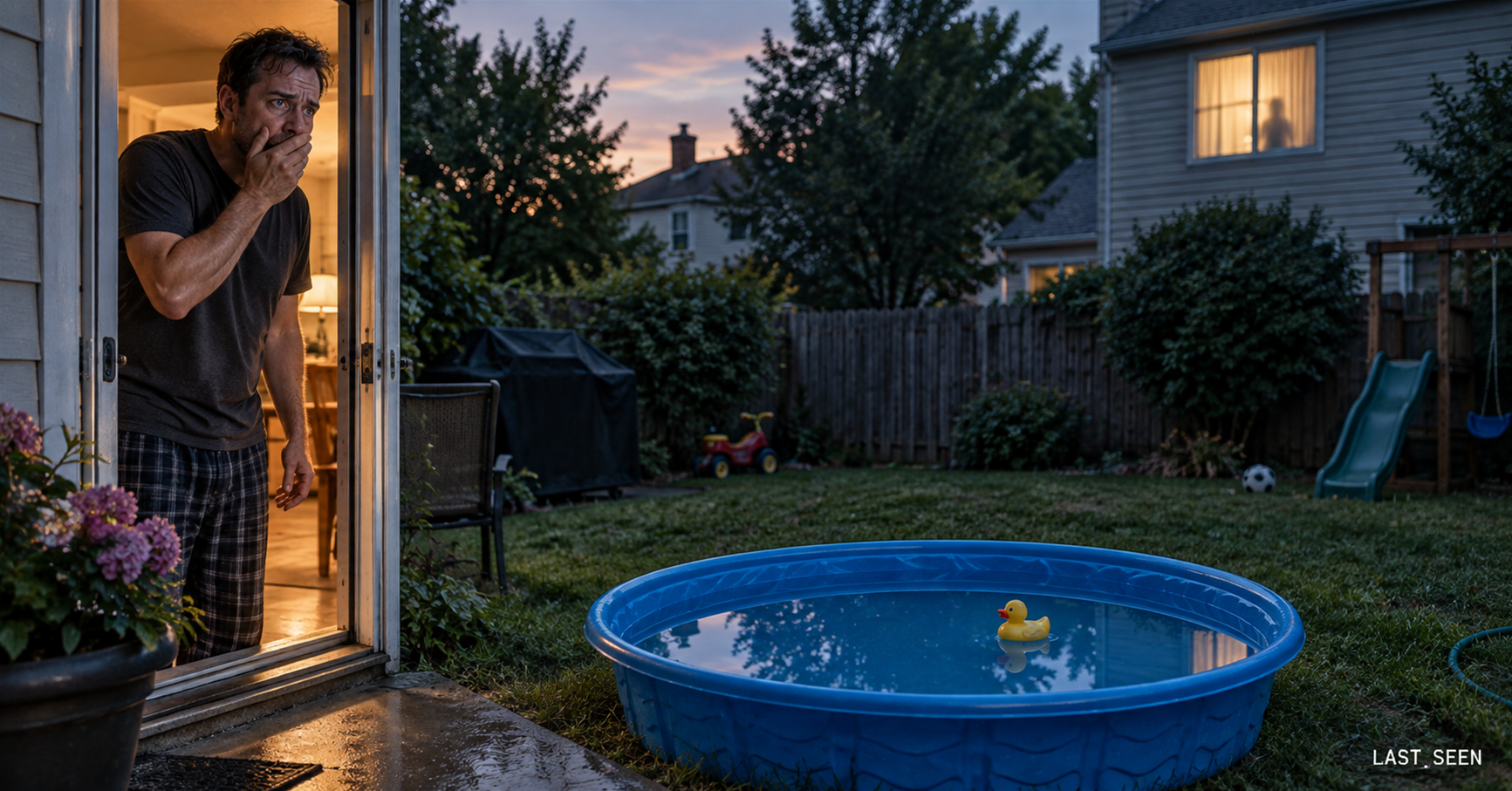
Then, during a late shift when the tier had gone quiet, Hadden placed a page on the metal table between them. It showed a small square pool, a fence, and a child drawn in heavy pencil.
"You ever hear of Silver Spring?" Hadden asked.
Jack said no.
Hadden looked at the drawing for a long time.
"There was a little girl there," he said. "Her name was Michelle."
Jack did not touch the page.
He listened.
ADVERTISEMENT
You May Also Like
-
CompletedChapter 16

The Profiler's Broken Silence
Clara was the most brilliant criminal profiler in the city, gifted with the power to expose any monster with her sketches. But her world shatters when her own husband, Sebastian, betrays her to protect the man who destroyed her family. After her hands are broken and her loved ones are gone, Clara realizes that love was just a gilded cage. Now, she doesn't want his apologies—she wants his downfall.Glow-Up|Possessive Love|Second Chance|BE17.9k words5 89 -
CompletedChapter 20
Tainted Crown: A Tale of Sin and Sovereignty
Born in the freezing mud of the Lowlands, Solene learned early that survival has a price. When her mother trades their poverty for a place in Earl Dagon’s opulent mansion, Solene steps into a world of sparkling gems and deadly secrets. Behind her mask of a "Saint," she orchestrates a symphony of revenge, turning the imperial family into her puppets. The Prince, the Empire’s Golden Sun, thinks he can save her—but he is just another pawn in her cold-blooded game.Glow-Up|OE37.1k words5 49 -
CompletedChapter 13
The 999th Night: From Lovers to Strangers
After 999 nights of passion, Selina thought she was Julian's world. But to him, she was just a "placeholder" to kill time until his true love, Nina, returned. When a car crash forced him to choose, he protected Nina without a second thought, leaving Selina bleeding in the rain. Heartbroken and finally awake, Selina decides to vanish from his life forever. She books a one-way ticket across the ocean, leaving behind a decade of devotion. When Julian finally realizes that he can't live without his "shadow," all he finds is an empty house and a cold goodbye.Possessive Love|Second Chance|OE18.7k words5 41 -
CompletedChapter 12
Breaking the Ties of Love
Five years of marriage, five years of hell. Clara loved Xavier with every fiber of her being, but to him, she was nothing but a criminal—the monster who supposedly ruined his lover and crippled his sister. Locked away in a cold basement, Clara endured endless torment as penance for sins she never committed. But when the truth finally surfaces, Xavier falls to his knees, begging for a second chance. Too late. The Clara who loved him is already dead, and she is ready to walk into the darkness to escape him forever.Possessive Love|Love After Marriage|Second Chance|BE16.6k words5 41 -
CompletedChapter 12
Unloving You: A Rebirth of Letting Go
In his past life, Julian spent ten years chasing a woman who saw him only as a burden. He ruined her happiness, and in the end, she died saving him. Given a miraculous second chance, Julian wakes up on the very day of his 56th failed confession. This time, instead of flowers and pleading, he hands the bouquet to the man she truly loves. "I'm letting you go, Scarlett," he whispers. But as Julian packs his bags to disappear forever, the cold and powerful Scarlett begins to feel a suffocating panic. Why is the boy who once worshipped her now looking at her with such indifferent eyes?Glow-Up|Possessive Love|Fake Relationship|OE17.0k words5 38 -
CompletedChapter 11
After the Divorce, Hearts Came Running
Clara spent five years trapped in a cold, touchless marriage with Julian, the world-renowned surgeon who claimed he couldn't stand physical contact. But on their anniversary, after traveling thousands of miles to surprise him in Edinburgh, she found him tenderly caring for his ex-lover in the rain. At that moment, the rose in her heart finally withered. Julian chose his past; Clara chose her freedom. But when she returned home and erased every trace of him, the man who once couldn't stand her touch began to beg for a second chance.Fake Relationship|OE16.2k words5 30 -
CompletedChapter 10
The Heart He Burned
Clara Joy dedicated six years of her life and all her intellect to saving the man she loved, Julian Pierce. She immersed herself in exhaustive research to create an artificial heart that could keep him alive. However, at the moment of her greatest victory, she discovered that Julian saw her only as a pawn in a game of revenge and protection for his true lover, Vivian. He destroyed Clara's laboratory, burned her dreams, and locked her in an attic on her wedding day. But Julian forgot one thing: a broken heart cannot be mended with lies. When Clara disappears into the shadows with a mysterious stranger, Julian realizes that the heart he truly needs is not the metal one, but the one he himself threw away.Age Gap|Substitute Lover|OE12.0k words5 29 -
CompletedChapter 6
The Beast Handler's Seduction
In the depths of Sector Alpha, Dawn is the only human the bio-experiments trust. But after a laboratory glitch, the lines between caretaker and prey blur. Her subjects—a possessive Kraken, a longing Merman, and a lethal Jellyfish—have evolved. They no longer want food; they want her. As forbidden desires clash with cold steel of the lab, Dawn must decide if she is their master, or their ultimate prize.Spirits|Instant Marriage|HE5.2k words5 26 -
CompletedChapter 4
The Mafia's American Rose
After catching her boyfriend in a pathetic act of betrayal, Emily’s study abroad dream shattered. Crying on a moonlit street, she expected pity. What she got was Alessandro Romano—a man whose gaze held the quiet power of a coming storm, and whose name made the city itself hold its breath. He offered her a ride. A conversation. A glimpse into a world of opulent villas, unspoken rules, and loyalty bought with fear. He was everything she should run from: ruthless, commanding, and the undisputed head of the most powerful family in Tuscany. Yet, in his darkness, she found a shelter she never knew she needed. But in Alessandro’s world, attention is a double-edged sword. His rivals notice the American girl who dares to challenge him. His protection becomes a target on her back. When an attempted kidnapping proves the danger is all too real, Emily faces an impossible choice: flee back to her safe, ordinary life, or embrace a love that is as intoxicating as it is lethal. He has one rule: what is his, he keeps. Forever. Now, Emily must decide if she’s willing to become the most coveted prize in a war she never asked to join.Age Gap|Sweet Romance|HE5.1k words5 9